

DIGNIFIED INDEPENDENCE
Global Country Classification & Country-Specific Policy Framework
Global Country Classification & Country-Specific Policy Framework
Official Country Tiers, Service Availability, Recruitment Eligibility, Training Fees, Salary Ranges, Grants, Benefits and Operational Conditions for Every Country
1. Purpose and Scope
This framework is the official country-tier policy used by Dignified Independence for global operational planning. It applies
across the Dignified Independence institutional ecosystem, including its 14 legal entities, 88 specialised departments, 313
integrated services, employment pathways, professional services, training and academic programmes, office deployment,
sourcing, manufacturing and field operations.
The six tiers are operational categories. They are not a ranking of the dignity, worth, culture, nationality, ability or human
value of any country or person. All core institutional, employment, professional and service-quality policies remain
common across all tiers. Tier differences exist primarily to adapt monetary values to purchasing capacity and operating
costs, and to adapt physical operations to security and operational risk.
2. Global Reach and Interpretation
- Current coordinated reach: 188 countries.
- The master classification contains 197 country and state-level entries across six tiers.
- Tier 1 to Tier 5 may include direct registered operations and offices, subject to local law, licensing and operational
readiness. - Tier 6 is normally managed without a direct DI office and may rely on partner organisations, remote coordination or
other legally appropriate arrangements because of elevated security or operational constraints. - Countries not yet counted within the 188-country active reach may still receive online or limited coordination while
direct or partner-supported structures are being developed. - DI continues to expand toward wider global coverage and may begin or deepen direct operations as local conditions
improve.
3. The Tier Is a Default - Local Conditions Can Override It
A country’s published tier is the default national operating category. Actual operating conditions may be reclassified for a
specific state, province, district, city or locality. For example, a high-risk locality inside a Tier 1 country may temporarily be
operated under Tier 6-type controls; equally, a demonstrably safe locality inside a Tier 3 or Tier 4 country may receive a
denser office and service model.
Area-level decisions are made through the Office Coordination review mechanism under the governance of the Chief
Coordinator, based on verified security, legal, logistical and operational evidence. Formal review normally occurs during
the annual budget and operational-planning cycle. Credible reports from customers, candidates, staff, representatives,
partner organisations or local stakeholders may trigger an immediate review at any time; urgent corrective action does not
wait for the next annual cycle.
4. Standard Office and Service Model
Every DI office follows the same functional institutional template. A representative office is not a reduced-function office
merely because it is the only office in a country. Where an office is established, it is designed to coordinate the complete
DI ecosystem applicable to that jurisdiction.
- 88 specialised departments, each coordinated by the relevant qualified and experienced Service Secretary.
- 313 services, with a separate qualified and experienced Service Specialist for each service.
- Representation and coordination across the 14-entity institutional ecosystem.
- Administrative, documentation, customer-support, product, distribution and operational functions required for the
location. - Public access by prior appointment when an in-person meeting is necessary; general walk-in visits are not promoted.
5. Security-Adjusted Office Deployment
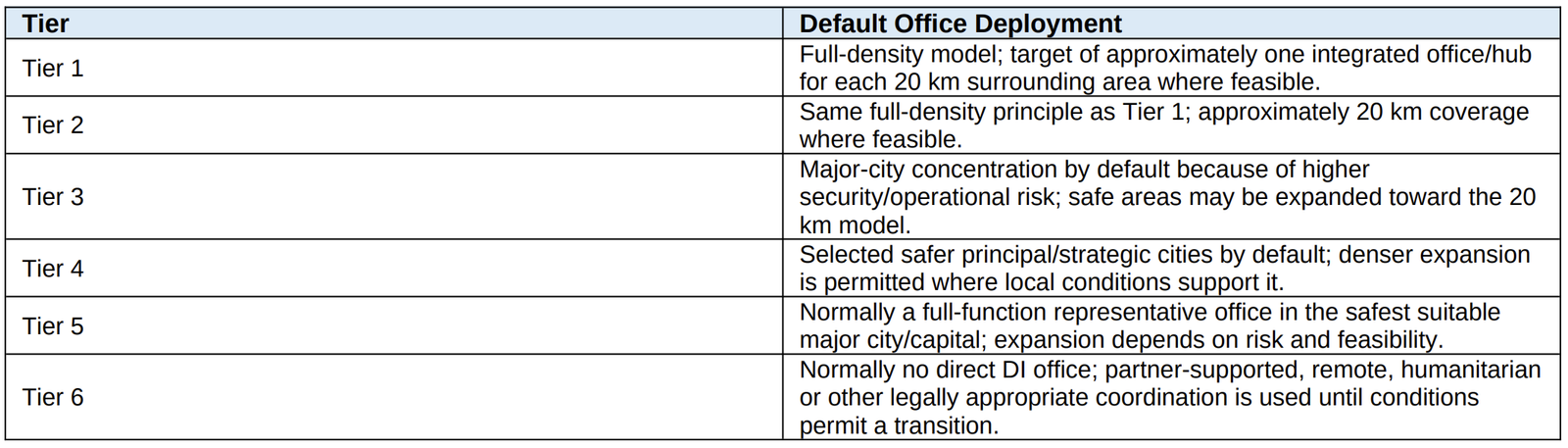
Tier 1 operations reached the full-density development stage earlier; Tier 2 subsequently adopted the same model. Office density is reduced in higher-risk tiers because of safety and operational constraints, not because DI is unwilling to serve those communities.
6. Service Delivery, Sourcing and Manufacturing
DI’s service catalogue is globally applicable in principle, but the delivery method, physical availability and local controls
may differ according to security, law, licensing, infrastructure and feasibility. Tier 1 and Tier 2 are designed for the
deepest direct service-delivery footprint, including home/community-level access where legally and operationally feasible.
Tier 3 and Tier 4 may apply additional controls; Tier 5 may require stronger preparation and coordination; Tier 6 may rely
on remote or partner-supported delivery.
Product sourcing and manufacturing follow a complementary strategy. High-cost Tier 1 markets are used less heavily for
low-cost sourcing/manufacturing, while Tier 3, Tier 4 and suitable Tier 5 locations are prioritised where safe, lawful and
quality-compliant production can reduce costs. Service quality, product standards and compliance requirements are not
reduced by the tier.
7. Recruitment and Employment Principle
Core employment policies, professional standards, benefits and appointment rules are the same across all tiers.
Monetary compensation varies because purchasing capacity, living costs, professional salary markets and operational
income differ.
- First priority: suitably qualified and experienced candidates from the country of appointment.
- Where suitable local candidates are unavailable, culturally or regionally appropriate candidates may receive practical
consideration – for example, GCC familiarity for a GCC vacancy or European regional familiarity for a European
vacancy. - Tier membership alone does not create recruitment priority. A Tier 2 candidate is not automatically preferred for a
Tier 2 vacancy in an unrelated region. - If suitable candidates remain unavailable, recruitment may be opened internationally from any tier, subject to
qualifications, experience, law, work authorisation and organisational need. - International migration is therefore often more visible from Tier 3-Tier 6 countries, but migration itself is not the
recruitment objective.
8. Global Compensation and Operational Grant Index

Tier 1 is the 100% benchmark. The approved Tier 1 salary or operational grant for a particular role is multiplied by the
applicable tier index. Salary differences reflect comparative economic and operational conditions; they do not reflect the
value of a nationality or employee.
Illustration only: if an approved Tier 1 role salary is USD 5,000, the index produces Tier 2 USD 3,500; Tier 3 USD 2,000; Tier 4 USD 1,000; Tier 5 USD 750; Tier 6 USD 500. Actual role salaries are stated in the applicable vacancy/appointment documentation.
9. Paid Professional and Service Fee Index

Paid professional and service charges use a separate affordability index. The index is intentionally flatter than the salary index because specialist time, technology, documentation, administration, compliance and quality-control costs remain substantial in every country.
10. Cluster Coordinator Training Fee

11. Academic and Professional Course Framework
Courses are delivered in three modes: fully online, fully offline/physical, and hybrid. A standard six-month course carries
500 one-hour instructional periods. Longer standard durations scale the instructional load as follows.

11.1 Fully Online Courses

The online benchmark is based primarily on faculty/trainer time, academic administration, assessment, platform, learning materials, supervision and certification systems. Accommodation, food, local transportation, visa and international airfare are not part of a fully online course fee unless a specific programme states otherwise.
11.2 Fully Offline / Physical Courses

The six-month offline benchmark is based on 500 instructional hours and a 180-day programme period. The base
package is designed to cover the normal academic and institutional fee, shared hostel/accommodation for up to 180
days, food for the programme period, local transportation, applicable student/health insurance and normal student
support. Actual programme terms identify the precise inclusions.
Tier 1 planning benchmark: USD 19,000 before separately applicable international travel and immigration-related costs.
For an international participant, airfare, government visa/permit charges, SEVIS or equivalent statutory charges where
applicable, professional visa/documentation support and other mandatory immigration costs are added according to
actual requirements. For an eligible local participant who does not require international travel or a new visa/permit
process, those non-applicable components are not charged.
Course-duration calculations use the approved instructional load and the actual number of days/months for
accommodation, food, insurance, transportation and other recurring components. One-time items such as initial visa
processing or a particular journey are not automatically multiplied merely because the course duration is longer.
11.3 Hybrid Courses
Hybrid programmes combine online and physical delivery. The applicable fee is calculated proportionately from the
approved online instructional component and the actual physical/offline component, including the number of physical
attendance days and the accommodation, food, transportation, insurance, laboratory, clinical or institutional facilities
actually required. There is therefore no artificial single hybrid percentage: the fee follows the real structure of the
approved programme.
11.4 Medical, Clinical and Laboratory-Intensive Programmes
Where a programme requires laboratory use, clinical facilities, supervised internal practice or comparable resourceintensive practical training, an additional 20% is applied to the Academic & Institutional Fee component only. The 20%
clinical/practical addition does not automatically apply to accommodation, food, airfare or unrelated living costs.
During an eligible house-surgency, internship, residency or comparable productive supervised practical-training period,
the trainee may receive a stipend equal to 40% of the prevailing salary for the comparable professional position in that
work location, subject to local law, licensing, regulatory requirements and the approved placement terms.
11.5 Instalment Payment Facility
Approved course fees may be paid in multiple instalments. The number, amount and due date of instalments are stated in
the applicable programme admission/payment schedule. An instalment facility does not change the total approved course
fee unless a separately documented concession, scholarship or adjustment applies.
11.6 Education Loan and Financial Consultancy Support
Candidates who require financial assistance for an eligible course may request professional education-loan and financial
consultancy support. Subject to eligibility, documentation, lender requirements and applicable law, support may include
identifying suitable loan options, documentation guidance, application preparation and coordination with banks, financial
institutions or other authorised providers.
This is an optional professional consultancy service and may carry a small applicable professional service fee. Loan
approval, loan amount, interest rate, repayment period, security/collateral requirements and all lending conditions are
determined exclusively by the relevant authorised lender. Dignified Independence does not guarantee loan approval.
12. Core Benefits and Policies Remain Common
Tier classification does not reduce the dignity, professional standard or core policy entitlement of an employee, trainee, customer or beneficiary. Employment benefits, professional standards, governance requirements, service-quality standards and applicable institutional rules remain common. Where local law provides a mandatory or more favourable requirement, the applicable legal requirement is followed.
13. Central Communication, Appointments and Reporting
All enquiries are received through the central intake system and internally segregated to the appropriate department,
service, geography or responsible team.
- Official Email: Application@di-ngo.org
- Official WhatsApp / Global Helpline: +971 58 975 1369
- Office visits are by prior appointment when an in-person meeting is considered necessary.
- Customers, candidates and other stakeholders may report a local security or operational classification concern
through the same central channels.
14. Country and State-Level Master Classification
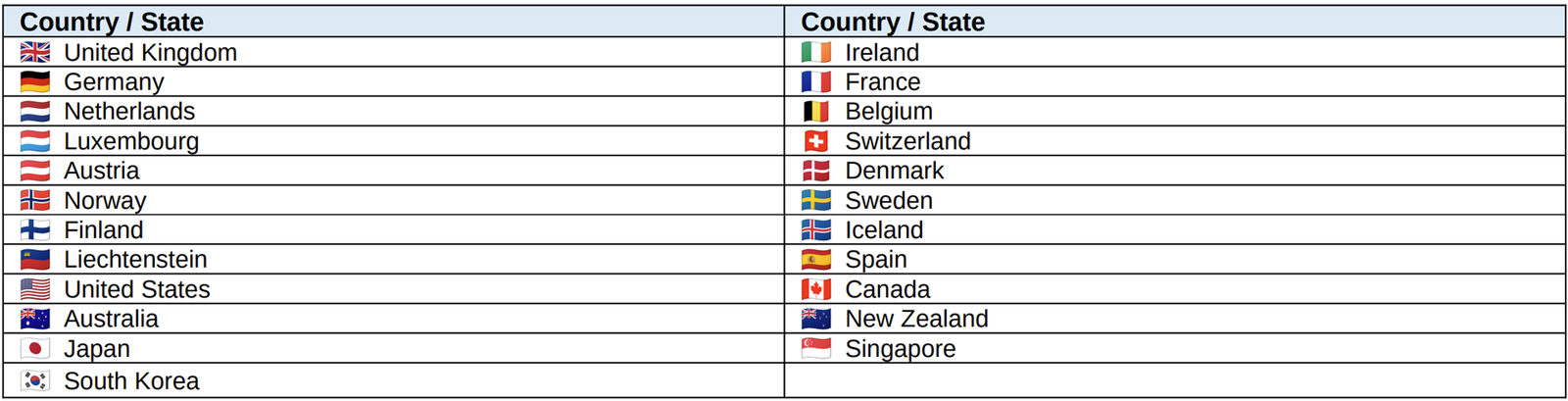
The following list is the master six-tier classification. Flags are shown for rapid identification.
Tier 1 – Established High-Capacity Operational Countries
Tier 2 – Advanced Operational Expansion Countries
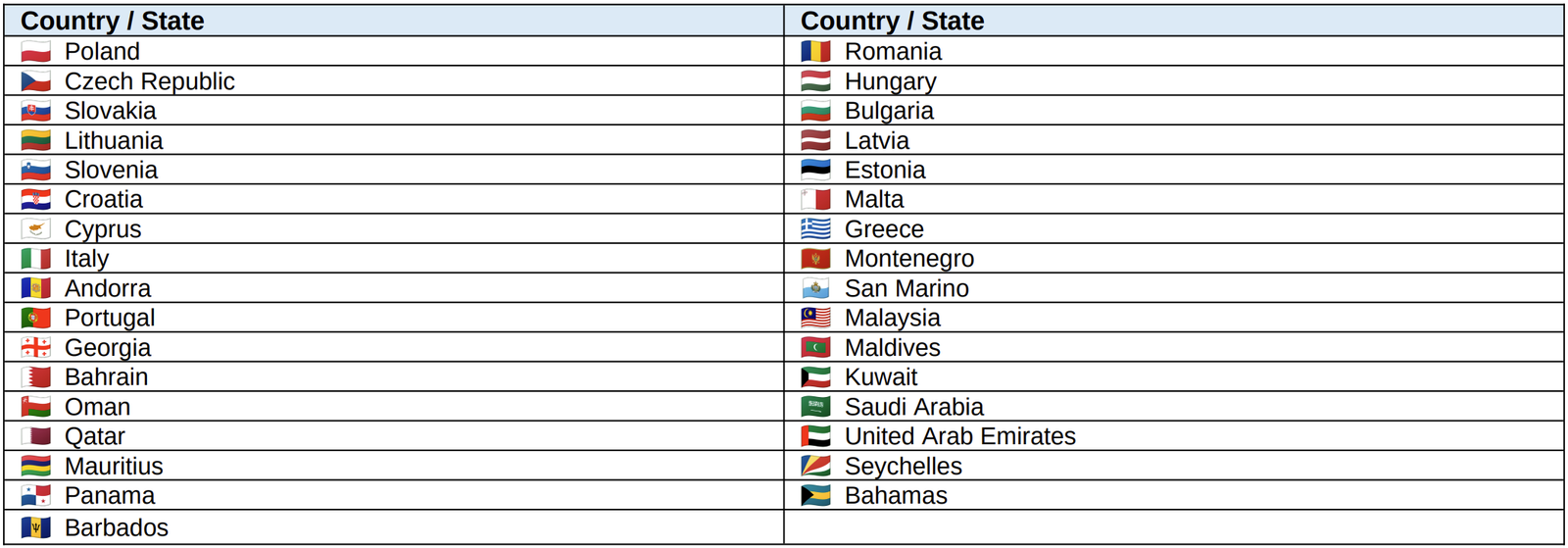
Tier 3 – Strategic Emerging-Opportunity Countries
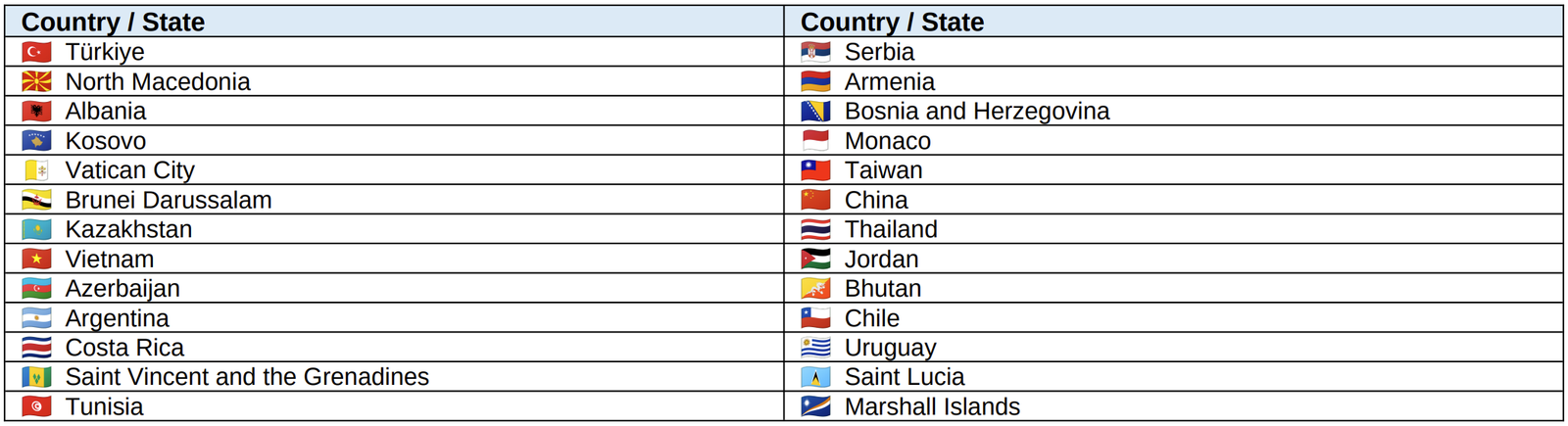
Tier 4 – Transitional and Broad Expansion Countries
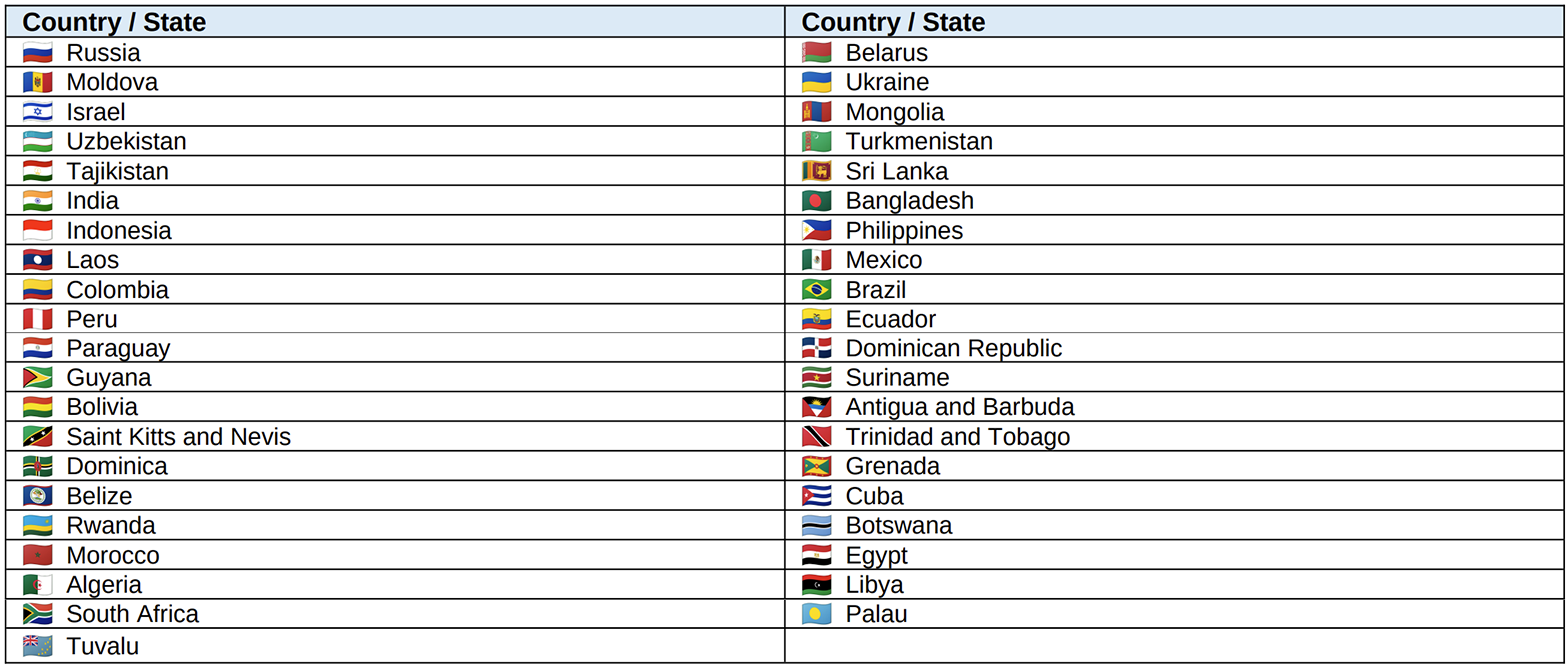
Tier 5 – Capacity-Building and Growth Countries
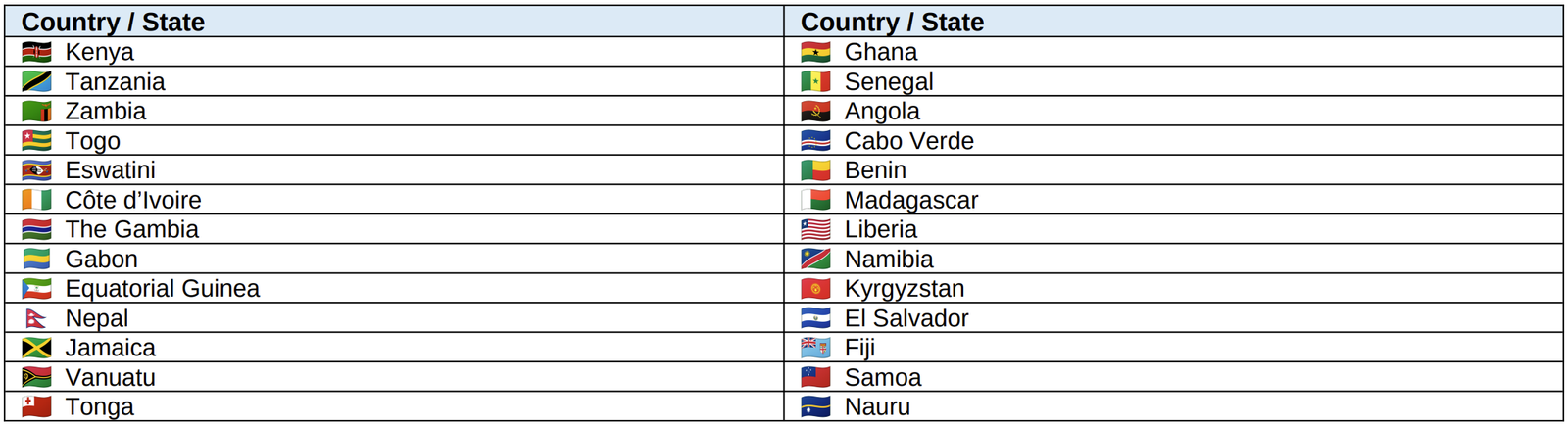
Tier 6 – Humanitarian-Priority and High-Constraint Countries
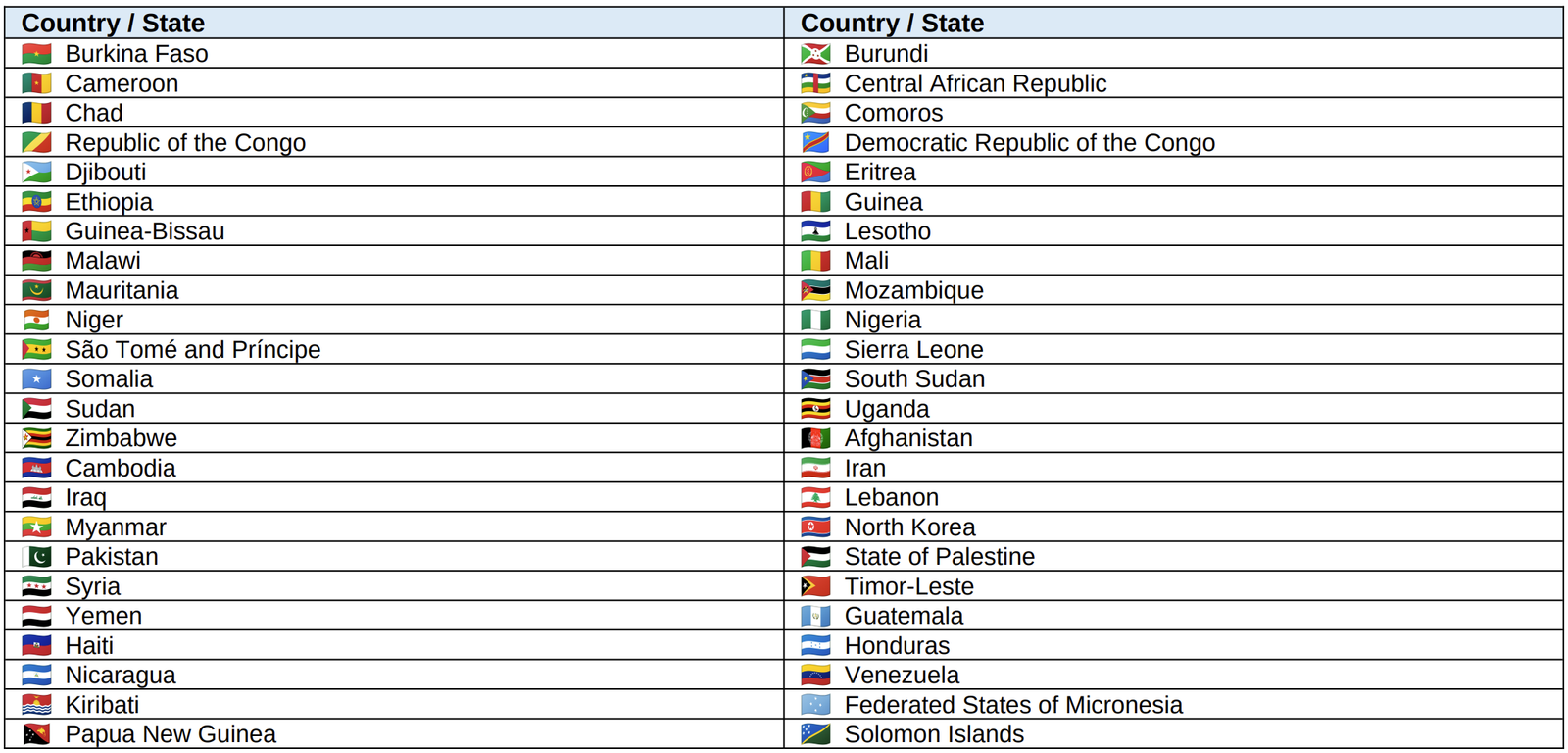
15. Associated Territories and Dependent Jurisdictions
Non-sovereign territories, overseas territories, dependencies, autonomous regions and special jurisdictions are not
counted as independent countries within the 197-entry master total. They may nevertheless receive an operational
association for planning purposes and remain subject to the laws of the administering jurisdiction and applicable local
rules.
- Tier 2 associated jurisdictions: Bermuda; British Virgin Islands; Cayman Islands.
- Tier 3 associated territories/dependencies: Canary Islands; Ceuta; Melilla; Northern Mariana Islands; Turks and Caicos Islands; American Samoa; Gibraltar; Saint Martin (French Part); Saint Barthélemy; Anguilla; Mayotte
16. Important Interpretation and Availability Notice
- A tier does not guarantee an active vacancy, immediate recruitment, visa, sponsorship, relocation, loan, office,
licence or availability of every service at the same time. - Service and programme availability remains subject to law, licensing, security, infrastructure, qualified workforce,
demand, operational readiness and formal approval. - Nationality or tier never replaces role-specific qualification, experience, competency, integrity or professional
eligibility. - Security conditions can require an office, service or programme to be limited, modified, relocated, partner-supported
or temporarily suspended. - Tier classifications and local operating categories may be updated when reliable evidence or changed conditions
justify a revision.
17. Payment Safety
No person should make an unofficial payment merely in exchange for employment. Any authorised payment must relate to a clearly identified training, academic, membership, ID-card or professional service; be communicated through an official channel; be paid only to an authorised account; and be supported by the applicable acknowledgement or documentation.
18. Official Contact
Official Email: Application@di-ngo.org
Official WhatsApp / Global Helpline: +971 58 975 1369
Website: www.un-ngo.org
Global Corporate Coordination: Sharjah, United Arab Emirates
Final Statement
Dignified Independence uses this framework to adapt economic values and operating methods to real-world conditions while preserving common standards of dignity, professionalism, quality and institutional responsibility. Different countries may require different financial and security arrangements, but every person is approached with equal human dignity.
Different Countries. Different Operational Conditions. Equal Human Dignity.
Achievements
Want to make a difference?
Come join us for endless opportunities, where your passion meets purpose, creating positive change together.
Our partners